Experience the ultimate summer cool-down with this stunning Blue Lemonade. Unlike store-bought versions filled with artificial dyes, this vibrant beverage relies on the magic of botanical science to achieve its electric hue. The striking transition from sunny citrus yellow to deep royal blue makes it the centerpiece of any outdoor gathering.
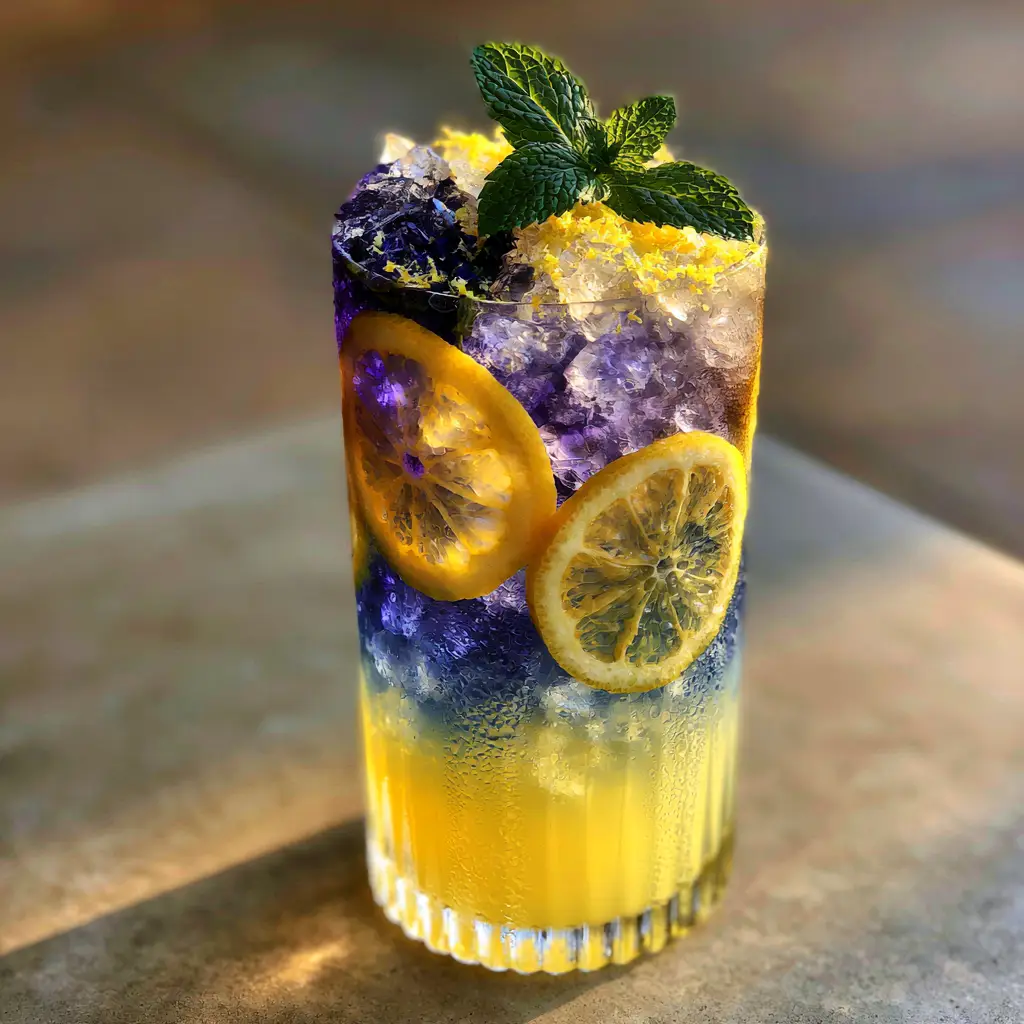
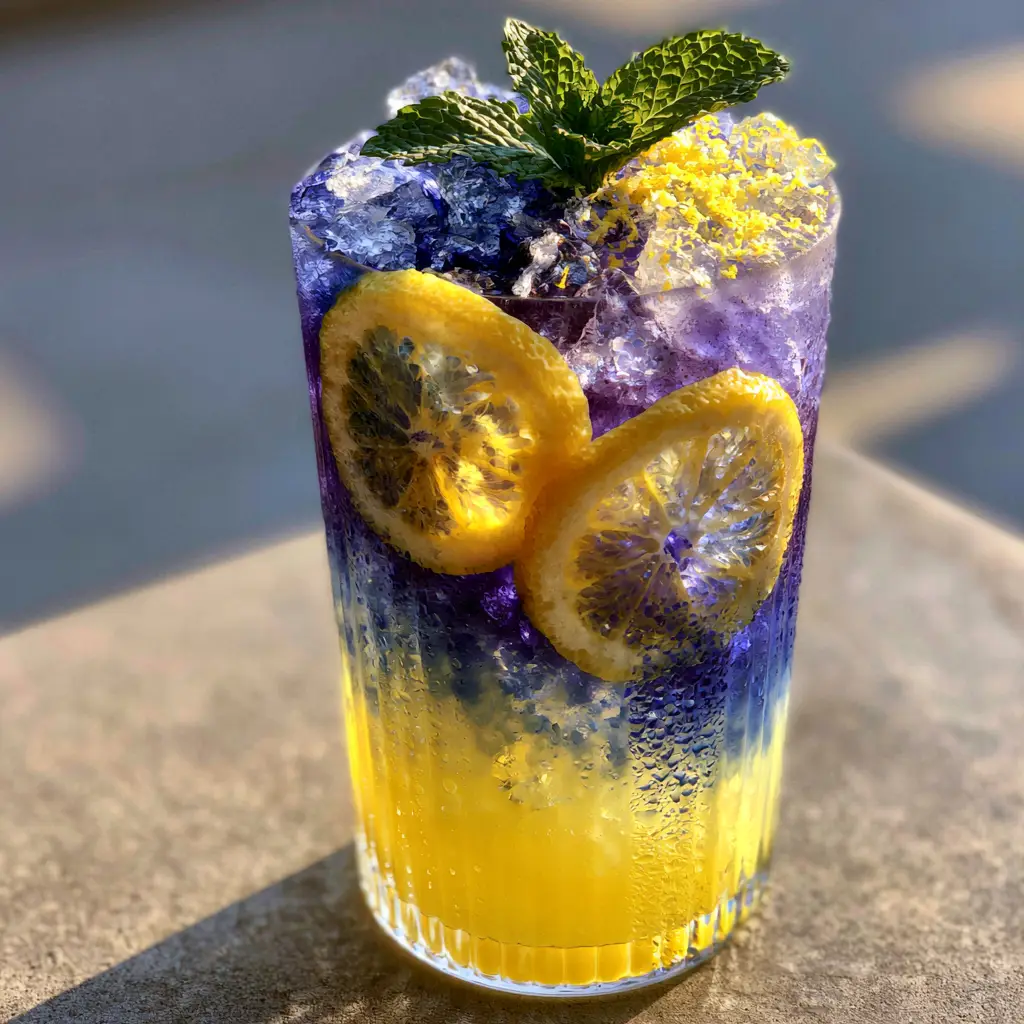
Imagine sitting on a concrete patio, the sun warming your skin while you hold a tall, chilled ribbed glass. You watch as the condensation beads and rolls down the side, revealing layers of fresh-squeezed lemonade and an indigo-tinted crown of butterfly pea flower tea. It is more than just a drink; it is a visual masterpiece that tastes even better than it looks.
This Blue Lemonade isn’t just about aesthetics. It utilizes the pH-sensitive properties of the butterfly pea flower to create a natural violet gradient where the layers meet. Whether you are looking for non-alcoholic summer drinks to keep the family hydrated or want a “wow-factor” mocktail for your next party, this recipe delivers on every front.
The Visual Allure of Naturally Layered Citrus
- Vibrant Natural Gradient: The recipe uses butterfly pea flower tea to achieve a deep royal blue and violet top layer without a single drop of food coloring.
- Artisanal Textures: Crystal clear crushed ice fills the glass, creating a sparkling, diamond-like effect that catches the natural daylight.
- Pressed Citrus Aesthetic: Thinly sliced lemon wheels are pressed firmly against the glass, ensuring the yellow lemonade layer pops against the ribbed texture.
- Aromatic Garnish: A fresh, vibrant green mint sprig and a fine dusting of lemon zest provide both a visual contrast and an immediate olfactory hit.
The Essential Components for a Vibrant Blue Lemonade
Creating this layered masterpiece requires high-quality ingredients that serve both structural and flavor purposes. Here is what you will need to gather for your Blue Lemonade.
Dried Butterfly Pea Flowers: These botanical wonders are the source of the intense blue pigment. Use 1 tablespoon (approx. 2g) of dried flowers to create a concentrated tea that will sit atop your lemonade. If you can’t find these, you can explore other tropical blue Caribbean cocktail inspirations, though the color may differ.
Fresh Lemons: You will need 1 cup (240ml) of freshly squeezed lemon juice to provide the bright, acidic base. The acid is crucial, as it reacts with the tea to create that beautiful violet transition layer.
Granulated Sugar: 3/4 cup (150g) of sugar creates a simple syrup that increases the density of the bottom layer. This density is scientifically required to ensure the blue tea floats on top rather than mixing immediately.
Filtered Water: Use 3 cups (720ml) of high-quality filtered water to ensure the flavors of the citrus and tea remain crisp and clean. Impurities in tap water can sometimes dull the vibrant blue of the flowers.
Fresh Mint Sprigs: These provide a cooling aromatic element that balances the tartness of the lemon. Ensure they are vibrant green and turgid for the best visual presentation.
Artisanal Crushed Ice: Use 2-3 cups (approx. 300-450g) of clear crushed ice. The small surface area of crushed ice helps hold the lemon wheels in place and supports the weight of the top layer.
Precision Tools for the Perfect Layered Pour
To achieve the professional look seen in the magical color-changing lemonade trends, you will need a few specific tools. A tall ribbed glass is essential for the light-refraction effect described in the visual blueprint. You will also need a fine-mesh strainer to ensure your lemon juice and tea are free of pulp and botanical debris.
A long-handled bar spoon is the secret weapon for layering. By pouring the blue tea over the back of the spoon, you break the surface tension, allowing the indigo liquid to rest gently atop the heavier yellow lemonade. Finally, a microplane is necessary for that “subtle dusting” of lemon zest that finishes the drink.
Step-by-Step Guide to Crafting the Blue Lemonade
1. Extracting the Botanical Blue Pigment
Steep 1 tbsp (2g) of dried butterfly pea flowers in 1/2 cup (120ml) of boiling water. Let this sit for at least 5-7 minutes; the water should turn an opaque, deep royal blue. Strain the liquid into a small pitcher and allow it to cool completely at room temperature. Heat will cause the layers to mix too quickly, so patience is key here.
2. Preparing the High-Density Lemonade Base
Combine 3/4 cup (150g) of sugar with 1/2 cup (120ml) of water in a small saucepan. Heat over medium until the sugar is fully dissolved, creating a simple syrup. Mix this syrup with 1 cup (240ml) of fresh lemon juice and the remaining 2 cups (480ml) of cold water. Stir until the mixture is uniform and chilled. The high sugar content makes this layer heavy, providing the foundation for our Blue Lemonade.
3. Architecting the Glass Presentation
Take your tall ribbed glass and press 3-4 thinly sliced lemon wheels firmly against the interior walls. The moisture of the lemons should help them stick to the glass. Carefully pack the glass to the brim with crushed ice. The ice acts as a structural scaffold, pinning the lemon wheels in place and providing a platform for the next layer.
4. The Masterful Layering Technique
Pour the yellow lemonade base into the glass until it is about 3/4 full. Now, take your cooled butterfly pea tea. Hold a bar spoon just above the surface of the lemonade and slowly pour the blue tea over the back of the spoon. Watch for the sensory cue: as the blue tea hits the acidic lemonade, a thin violet ribbon will form at the interface, while the top remains a deep royal blue.
5. Finishing Touches and Aromatics
Garnish the top of the drink with a perfectly fresh mint sprig, tucking the stem into the ice so the leaves sit proudly on top. Use a microplane to add a subtle dusting of yellow lemon zest over the ice. The zest should look like tiny golden sparks against the deep blue surface. Serve immediately while the condensation is dripping down the glass.
Expert Tips for a Professional Finish
- Density is Key: If your layers are mixing, your lemonade likely needs more sugar. A higher sugar concentration increases the specific gravity, making it easier for the lighter tea to float.
- Temperature Control: Ensure both the lemonade and the tea are chilled before assembly. Warm liquids move faster and mix more readily, destroying the crisp line between colors.
- Ice Quality: Use “clear ice” if possible. Cloudiness in ice comes from trapped air, which can distract from the vibrant colors of the Blue Lemonade.
- Citrus Freshness: Only use lemons that are bright yellow and firm. Greening on the skin or soft spots will affect both the flavor and the visual appeal of the sliced wheels.
Scaling for Parties and Storage
You can prepare the components of this Blue Lemonade in advance, which is perfect if you are serving vodka batch cocktails or large mocktail portions. Store the lemonade base and the blue tea concentrate in separate airtight containers in the refrigerator for up to 3 days.
Do not assemble the layers until the moment of serving. The colors will eventually bleed into a uniform purple hue if left to sit for more than 20-30 minutes. If you have leftovers, they make excellent ice cubes for future blueberry mint lemonade drinks!
What to Serve With Your Refreshing Blue Lemonade
This drink pairs beautifully with light, summery fare. The tartness of the lemon cuts through rich desserts like a brownie refrigerator cake or the buttery crumb of cinnamon swirl snickerdoodle blondies.
For a themed “blue” party, consider serving it alongside strawberry pretzel salad for a red, white, and blue aesthetic. If you’re looking for more frozen treats, this lemonade is a great palate cleanser between bites of strawberry dole whip or homemade cake pops.
Frequently Asked Questions
Yes, but ensure it is a high-quality, high-sugar version. If the store-bought lemonade is too watery, the blue tea may sink. You can fix this by stirring a little extra simple syrup into the lemonade before layering.
Butterfly pea tea has a very mild, earthy, and slightly woody flavor, similar to a light green tea. Once mixed with the tart and sweet lemonade, its flavor becomes almost undetectable, leaving only the beautiful color.
The natural blue color comes from steeping dried butterfly pea flowers (Clitoria ternatea). When this tea interacts with the acid in lemon juice, it can also transition into shades of violet and purple.
They are commonly available at specialty tea shops, Asian grocery stores, or through online retailers. You can buy them as dried whole flowers or as a finely ground powder.
Layering depends on density and temperature. Your bottom layer (lemonade) must have enough sugar to be ‘heavy,’ and the top layer (tea) must be poured very slowly over the back of a spoon to prevent mixing.
The Ultimate Natural Blue Lemonade Recipe
Blue Lemonade: A Naturally Layered Butterfly Pea Flower Refresher
Ingredients
Equipment
Method
- Steep dried butterfly pea flowers in 1/2 cup (120ml) boiling water for 7 minutes until deep blue. Strain and cool completely.
- Dissolve sugar in 1/2 cup (120ml) water over heat. Mix with 1 cup (240ml) lemon juice and remaining cold water. Chill.
- Press lemon wheels against the inside of a tall ribbed glass. Fill to the brim with crushed ice to hold wheels in place.
- Fill glass 3/4 full with lemonade. Slow-pour blue tea over the back of a bar spoon to create the layered effect.
- Top with a mint sprig and a light dusting of fresh lemon zest. Serve while condensation is active.
Notes
Use extra sugar in the lemonade if the tea sinks; density is vital for layering.
Closing & Call to Action
This Blue Lemonade is the perfect marriage of culinary science and aesthetic beauty. It proves that you don’t need artificial ingredients to create something truly spectacular. The deep royal blue and sunny yellow layers are sure to be the highlight of your summer beverage rotation.
If you enjoyed making this visually stunning drink, please leave a comment below and let us know how your layers turned out! Don’t forget to follow alicecooks_official on Pinterest for more refreshing diy summer drinks and vibrant recipe inspiration. Share your photos and tag us—we love seeing your creations!