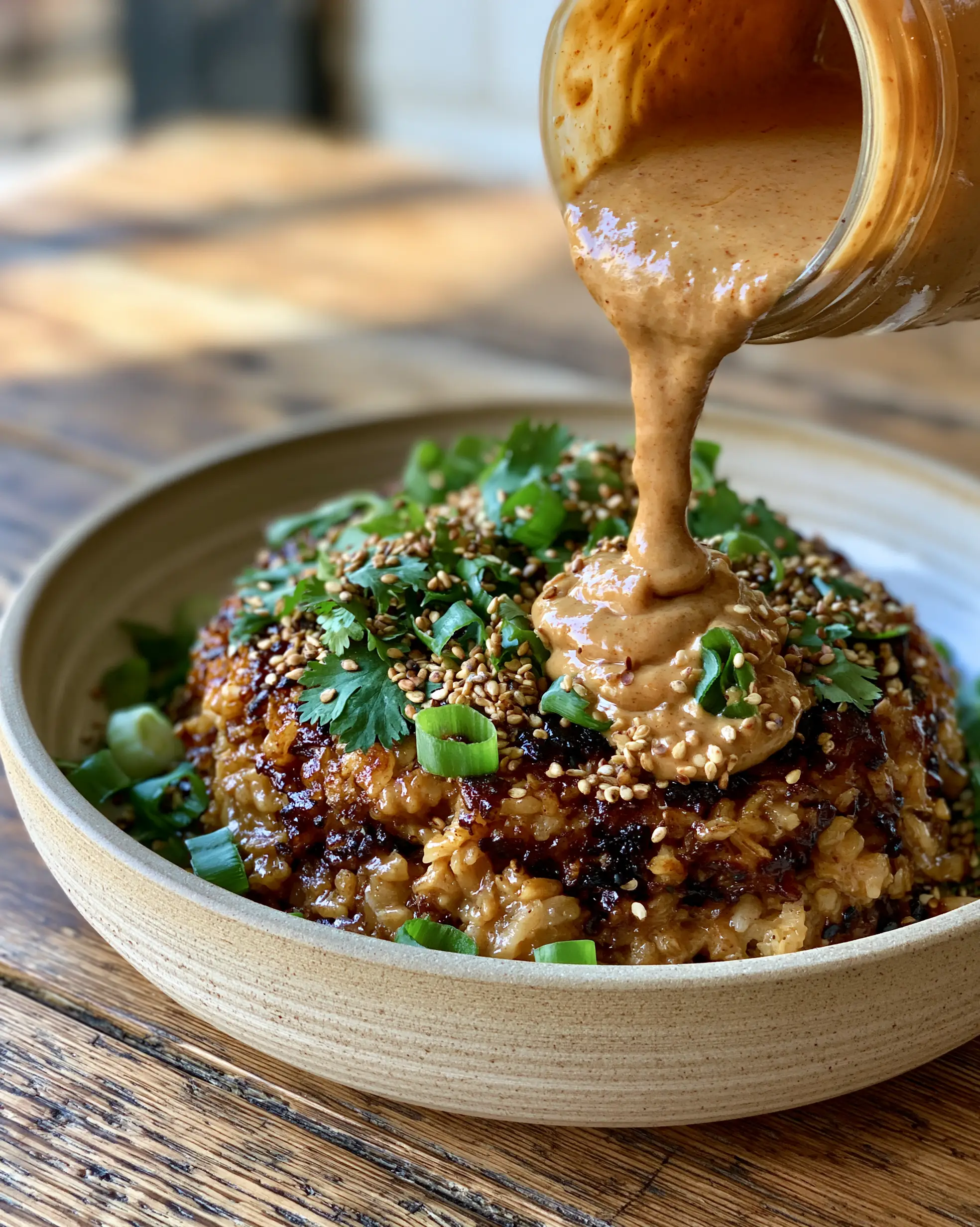
There is a specific kind of magic that happens when high heat meets starchy grains, creating a texture so addictive it feels like a professional kitchen mystery. These savory secrets are exactly what you need to transform a humble bowl of rice into a deeply caramelized, golden-brown masterpiece that rivals your favorite trendy bistro. Imagine the sound of a fork scraping against a shatteringly crisp rice crust, followed by the velvet-smooth pour of a rich peanut dressing that seeps into every nook and cranny.
In this guide, we aren’t just making dinner; we are engineering a sensory experience that balances salt, fat, acid, and heat. From the vibrant green of fresh cilantro to the nutty crunch of toasted sesame seeds, every element of this bowl has been visually and culinary calibrated for perfection. Whether you are a seasoned home cook or a beginner, mastering these techniques will unlock a new level of confidence in your weekday meal rotation.
Capturing the essence of a vibrant savory dinner bowl requires more than just following a list of steps. It requires an understanding of how textures interact—how the “give” of a creamy sauce complements the “snap” of a fried grain. By the end of this article, you will be the gatekeeper of the savory secrets that make this handheld-style bowl a visual and edible triumph.
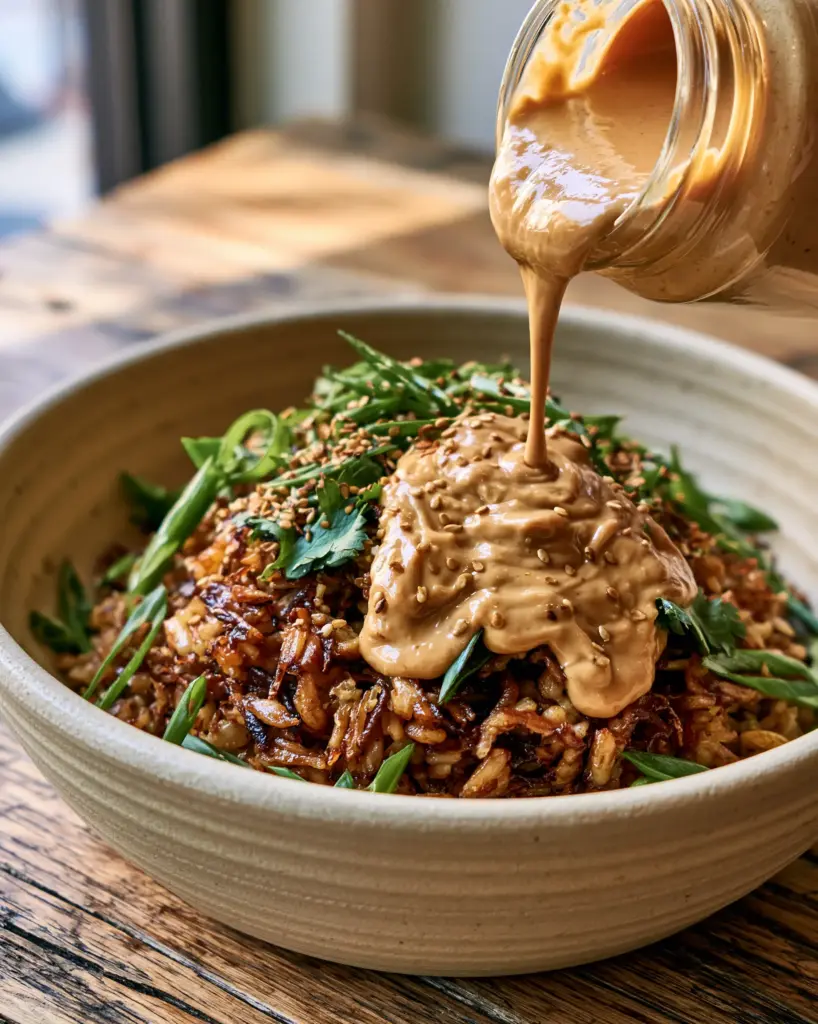
The Anatomy of a Perfect Golden-Brown Rice Bowl
- Shatter-Crisp Texture: We use a specific drying and searing technique to ensure the rice is deeply caramelized and golden-brown, not just oily.
- The Velvet Pour: A light-brown peanut sauce that is emulsified to a pouring consistency, ensuring it drapes over the rice rather than clumping.
- Vibrant Herbaceous Finish: Fresh scallions and cilantro provide a necessary aromatic lift that cuts through the richness of the peanut fats.
- Structural Integrity: Using the right rice grain ensures the bowl maintains its shape and bite even under a thick stream of sauce.
The Essential Components for Flavor and Texture
To achieve the visual and culinary results of our savory secrets, you must select ingredients that can withstand high-heat caramelization while maintaining their distinct identities. It isn’t just about what you include, but why each ingredient earned its place in the modern ceramic bowl.
Long-Grain Jasmine Rice: 3 cups (600g) of cooked and cooled rice is the foundation. Its lower moisture content compared to short-grain varieties allows for a superior “crisp” without turning into a mushy clump during the frying process.
Natural Creamy Peanut Butter: 1/2 cup (125g) acts as the fatty base for our sauce. We recommend the salted, drippy variety to ensure a smooth, professional-grade pour that looks stunning in photos.
Neutral High-Smoke Point Oil: 3 tbsp (45ml) of avocado or grapeseed oil is non-negotiable for the rice. You need an oil that can reach the temperature required for the Maillard reaction without smoking or imparting a bitter flavor.
Toasted Sesame Oil: 1 tbsp (15ml) added to the sauce provides an earthy, aromatic depth. It bridges the gap between the savory rice and the sweet-salty peanut base.
Fresh Lime Juice: 2 tbsp (30ml) provides the essential acid. This “secret” ingredient brightens the entire dish and thins the sauce to that perfect pouring consistency seen in our visuals.
The Garnish Trio: 1/4 cup (10g) fresh cilantro, 2 thinly sliced scallions (green parts only), and 1 tbsp (9g) toasted sesame seeds. These are not just decorations; they provide the “vibrant” green contrast against the golden-brown rice.
If you find yourself craving something sweet after this savory feast, you might consider a no-bake peanut butter treat to round out the flavor profile of your evening.
Tools for Achieving Professional Caramelization
To unlock the savory secrets of this dish, your equipment must be capable of high-heat conduction. A heavy-bottomed cast iron skillet or a high-quality non-stick pan is essential for ensuring the rice browns evenly across the entire surface area.
You will also need a small glass jar or a dedicated sauce pitcher to achieve that smooth, steady pour. For the garnishes, a sharp chef’s knife is required to get the “clean-cut” scallion rings and delicate cilantro leaves that make the bowl look like a handheld smartphone photo from a luxury food blog.
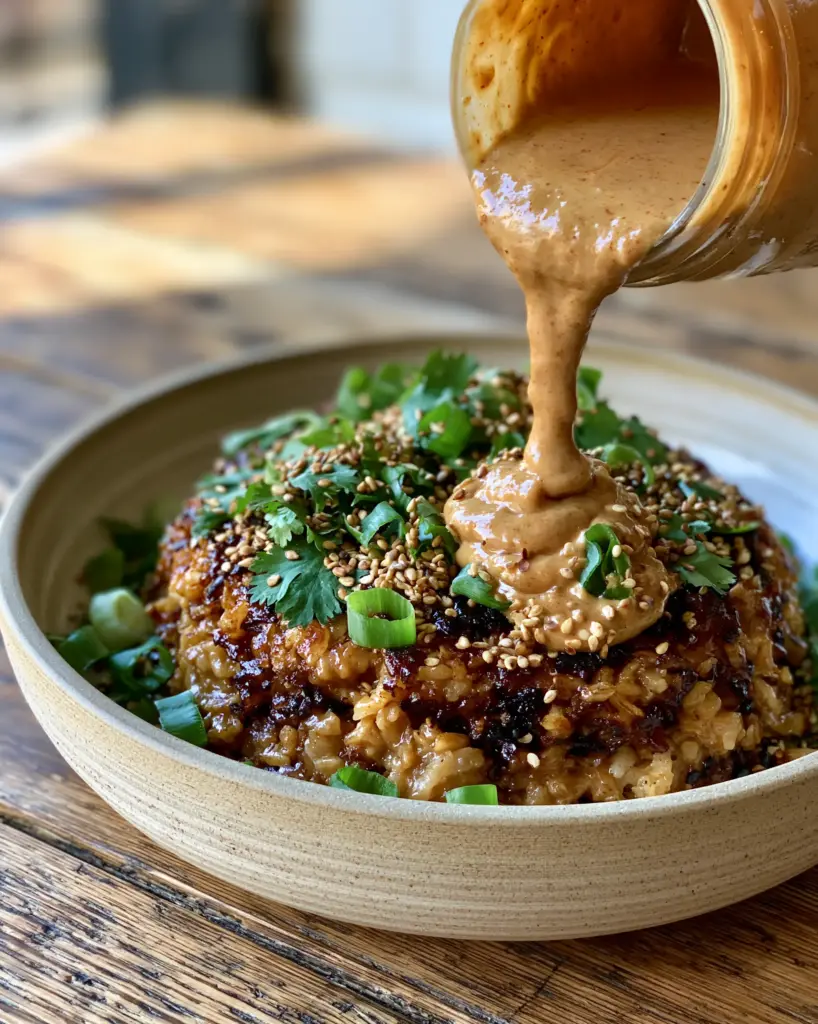
Mastering the Art of Deeply Caramelized Rice
Phase 1: Preparing the Grain for Heat
The first of our savory secrets is using day-old or properly dried rice. If your rice is too fresh and moist, it will steam in the pan rather than fry. Spread your 3 cups (600g) of cooked rice on a baking sheet and let it air-dry for at least 30 minutes, or refrigerate it uncovered overnight.
Phase 2: The Searing Process
Heat your 3 tbsp (45ml) of oil in a large skillet over medium-high heat until it shimmers. Carefully add the rice, pressing it down firmly with a spatula into a single, even layer. Leave it undisturbed for 5-7 minutes. You are looking for a deep, golden-brown crust to form—listen for the crackle and look for the edges to turn bronze.
Phase 3: Breaking and Flipping
Once the bottom is deeply caramelized, use your spatula to break the rice into large, rustic clusters. Flip them over to ensure the other side gets a light toast. This creates the “mound” of crispy rice that provides the structural base for our peanut sauce pour.
Engineering the Velvet Peanut Sauce Pour
A “thick stream of rich, creamy sauce” doesn’t happen by accident. In a small jar, whisk together 1/2 cup (125g) peanut butter, 2 tbsp (30ml) soy sauce, 1 tbsp (15ml) honey, and 2 tbsp (30ml) lime juice. Gradually add 2-3 tbsp (30-45ml) of warm water while whisking vigorously.
The “secret” here is the emulsion. The sauce should be thick enough to coat a spoon but fluid enough to pour smoothly without breaking. If it looks grainy, keep whisking; the fats and liquids need to bind completely for that minimalist, professional aesthetic.
While this sauce is savory, if you’re a fan of the peanut and sugar combination, you might enjoy experimenting with rich peanut butter brownies for your next baking project.
Expert Tips for Success
- Don’t Overcrowd the Pan: If you try to crisp too much rice at once, the steam will be trapped. Work in batches if your skillet isn’t large enough to keep the rice in a thin layer.
- The “Sizzle” Test: Before adding the rice, drop a single grain into the oil. If it doesn’t dance and sizzle immediately, your oil isn’t hot enough.
- Acidity Balance: If your peanut sauce feels too heavy, add an extra teaspoon of rice vinegar. This is one of the hidden savory secrets that professional chefs use to keep a dish from feeling greasy.
- Herb Preservation: Only chop your cilantro and scallions at the very last second. This ensures they remain “vibrant green” and don’t wilt before they hit the ceramic bowl.
How to Store and Reheat Your Crispy Creations
Crispy rice is best enjoyed immediately to maintain that signature crunch. However, if you have leftovers, store the rice and sauce in separate airtight containers in the refrigerator for up to 3 days.
To reheat, avoid the microwave as it will make the rice rubbery. Instead, return the rice to a dry skillet over medium heat for 3-4 minutes until the caramelization crisps up again. The peanut sauce can be thinned with a splash of warm water if it has thickened in the fridge.
What to Pair with This Savory Bowl
This vibrant dinner bowl is a complete meal on its own, but it pairs beautifully with high-contrast beverages. To cut through the richness of the peanuts, consider serving this with a crisp dragon fruit lemonade or perhaps some refreshing summer drinks that emphasize citrus and ice.
For a festive evening, a holiday margarita offers a sophisticated salt-and-lime profile that complements the savory secrets of the toasted sesame and soy elements in the rice.
Answers to Your Common Questions
While the rice is best fresh, you can prep the peanut sauce and chop the garnishes in advance. If reheating the rice, use a skillet with a tiny bit of oil to revive the crunch rather than using a microwave.
The secret is a combination of dry, cold rice and high-heat oil. Press the rice into an even layer in a hot skillet and do not move it for at least 5-7 minutes. This allows the Maillard reaction to occur, creating that professional golden crust.
Almond butter or sunflower seed butter (SunButter) are excellent 1:1 substitutes. They provide a similar creamy fat base while maintaining the savory-sweet balance of the sauce.
Long-grain jasmine rice is the gold standard for crispy rice bowls. Its lower starch-to-moisture ratio allows the grains to separate and brown individually, creating a shatter-crisp texture rather than a sticky clump.
Peanut sauce often ‘seizes’ when you add liquid. The key is to add warm water one tablespoon at a time while whisking vigorously. This emulsifies the fats and creates a smooth, pouring consistency.
The Ultimate Savory Secrets Rice Bowl Recipe
Savory secrets for the Ultimate Crispy Rice Bowl with Peanut Sauce
Ingredients
Equipment
Method
- Spread the cold, cooked jasmine rice onto a baking sheet. Pat it dry with a paper towel to remove excess moisture for maximum crispiness.
- Heat oil in a skillet over medium-high. Add rice in a flat layer and press down. Cook undisturbed for 5-7 minutes until a deep golden-brown crust forms.
- In a small jar, combine peanut butter, soy sauce, lime juice, honey, and sesame oil. Whisk in warm water 1 tbsp at a time until a smooth, light-brown pouring consistency is reached.
- Mound the crispy rice into a bowl. Pour the peanut sauce in a thick stream over the center. Garnish with scallions, cilantro, and sesame seeds.
Notes
Ensure the sauce is thinned enough to pour smoothly.
Start Your Culinary Adventure Today
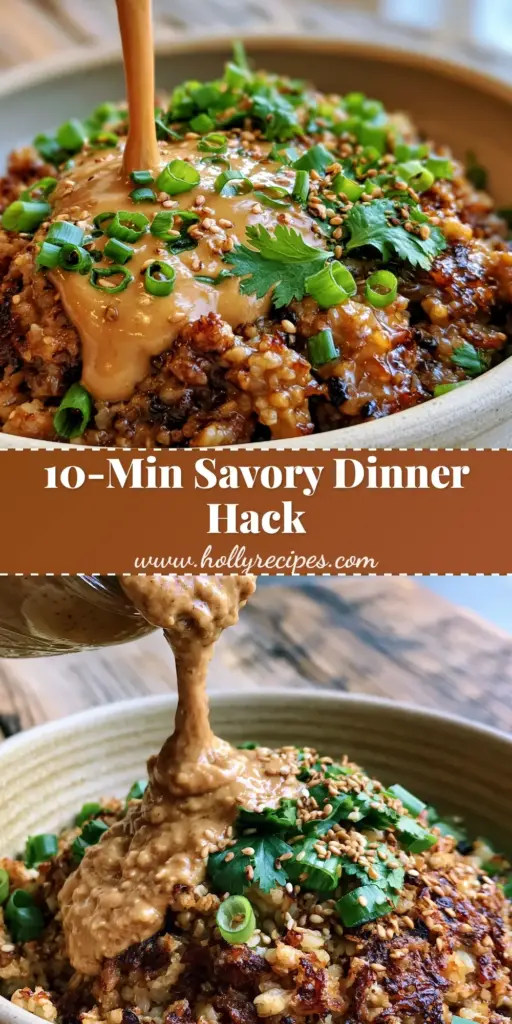
Now that you have the savory secrets to achieving that perfect, golden-brown crispy rice and creamy peanut sauce, it’s time to head to the kitchen. This recipe is more than just a meal; it’s a technique that will improve your understanding of heat and texture forever. Don’t forget to take a photo of your vibrant bowl—modern, textured ceramic highly recommended—and share it with us!
If you loved this recipe, please leave a comment below and share this post with your fellow home cooks. For more daily inspiration, follow us on Pinterest and join our community of food enthusiasts. Happy cooking!